


Everything Farmers Need to Know About Potash
What is Potash? A Farmer's Guide to this Essential Fertiliser
Potash is one of the most highly valued and widely used fertilisers in farming and horticulture around the world, providing a rich and affordable source of the nutrient potassium (K).
A lesser-known fact, however, is that its name derives from early farmers who collected wood ash in metal pots when the compound was first recognised as an effective plant nutrient.
Potash is now so well established that in 2023, 67.5 million tonnes were produced globally, with around 90% of that being used in the agricultural industry.
But what exactly is potash, and why is it so favoured by farmers the world over? In this article, we take a look.
What is Potash?
Essentially, potash is a general term for naturally occurring salts that contain potassium in combination with other salts such as chloride, sulphate, and sodium chloride.
It is formed from mineral deposits and seawater that dried up over millions of years, becoming concentrated in the earth’s crust.
However, due to the product’s versatility, it is also used in a wide range of other industries, including glass manufacturing, making soaps and detergents, explosives and fireworks, and as an alternative to de-icing roads and paths in winter weather.
How Potash is Produced
A common question we get asked is: how is potash produced?
The simple answer is that it’s not.
It is a naturally occurring compound, potash is mined rather than manufactured.
The salts are first extracted and then crushed and separated to obtain the useful elements. These are then graded to create the final products suitable for crop application.
Although traditional mining is the most common method of extraction, potash is also extracted by solution mining.
This is where hot water is injected into the ground via wells, the potash dissolves in the water to form a brine, and the brine is then pumped back to the surface where the potassium is extracted.
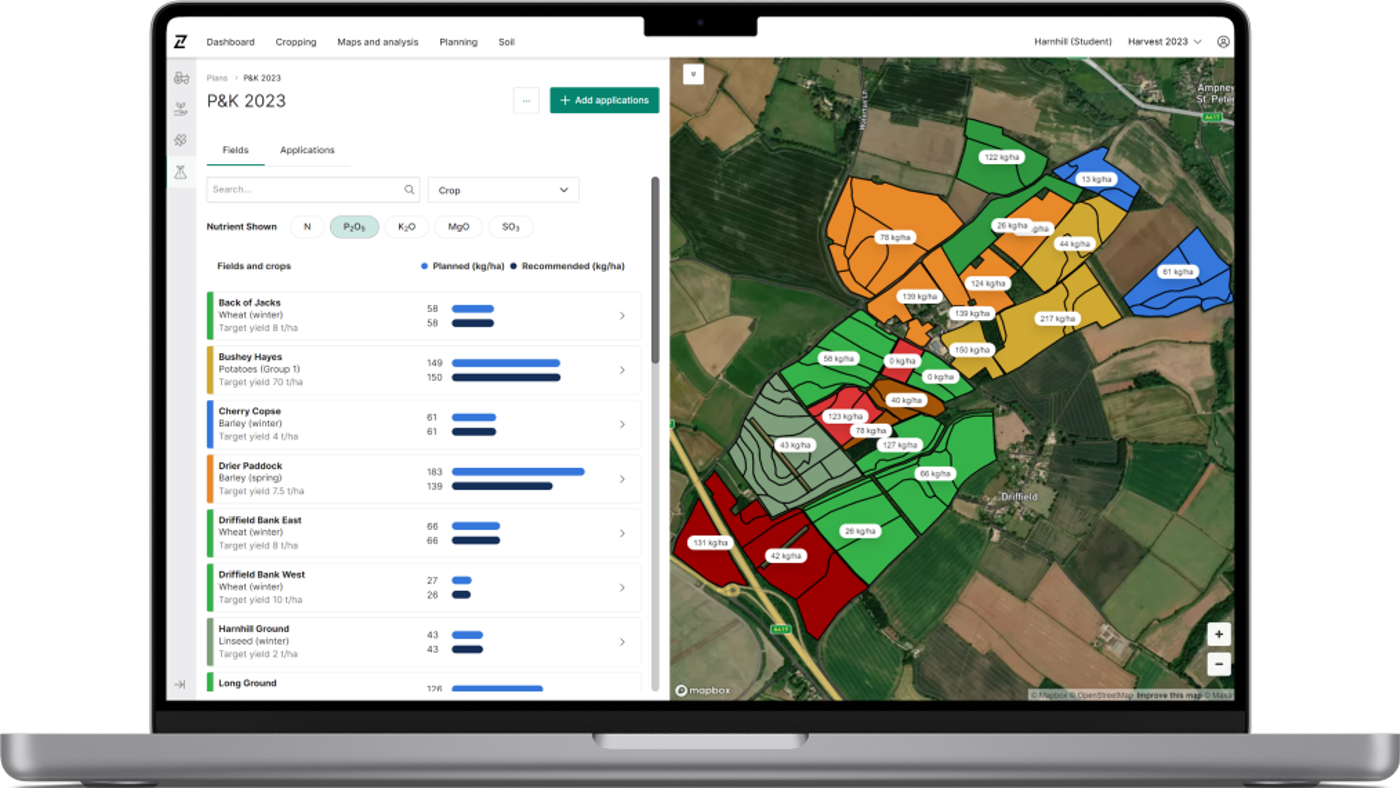
Soil Nutrient Mapping in Contour
The Benefits of Potash in Agriculture
Potash’s popularity is a result of its price, as a mined compound, it is often significantly cheaper than manufactured potassium fertilisers and the range of crop nutritional benefits it provides.
One of the main advantages of potash is that it regulates water content within a plant, enhancing nutrient transport through the xylem.
It also enhances photosynthesis, promotes strong root development, makes plants more resilient to drought and dry conditions, and strengthens plant cellular structure, which enhances resilience to pests and disease.
Potassium also plays a vital role in regulating the presence of other nutrients, in particular nitrogen, where an imbalance can lead to stunted growth and poor crop quality.
Types of Potash Fertiliser
The term potash might imply it refers to a single compound, but this is not actually the case. Potash is an umbrella term for a number of fertilisers, all of which are potassium-based but differ slightly in their makeup.
The most commonly used types of potash include:
-
Muriate of Potash (MOP)
MOP is the most commonly used form of potash. It contains around 60% potassium oxide with a secondary component of chloride.
Although it is a common plant nutrient, it can lead to an excess of chloride in produce, so growers often substitute it for Sulphate of Potash (SOP) instead. -
Sulphate of Potash
Sulphate of Potash is otherwise known as potassium sulphate (K2SO4). The need to add sulphur to crops is becoming increasingly necessary due to de-industrialisation, which has led to a lack of sulphur in soil, enhance the increasing popularity of SOP.
However, sulphate can leach away in wet conditions, so it is advised for use as a spring application rather than in autumn or winter. -
Potassium Nitrate
As the name suggests, this contains a combination of potassium oxide and nitrogen. It is used for high-value crops to ensure quality and yield. It is generally more expensive than other forms of potash but, when used correctly, can be very effective. -
High Potash Liquid Feed
High Potash Liquid Feed contains potassium nitrate, potassium sulphate, and potassium citrate, as well as a number of other micro-nutrients. It is usually used on flower and fruit crops, particularly to strengthen roots and stems and to combat drought and disease threats.
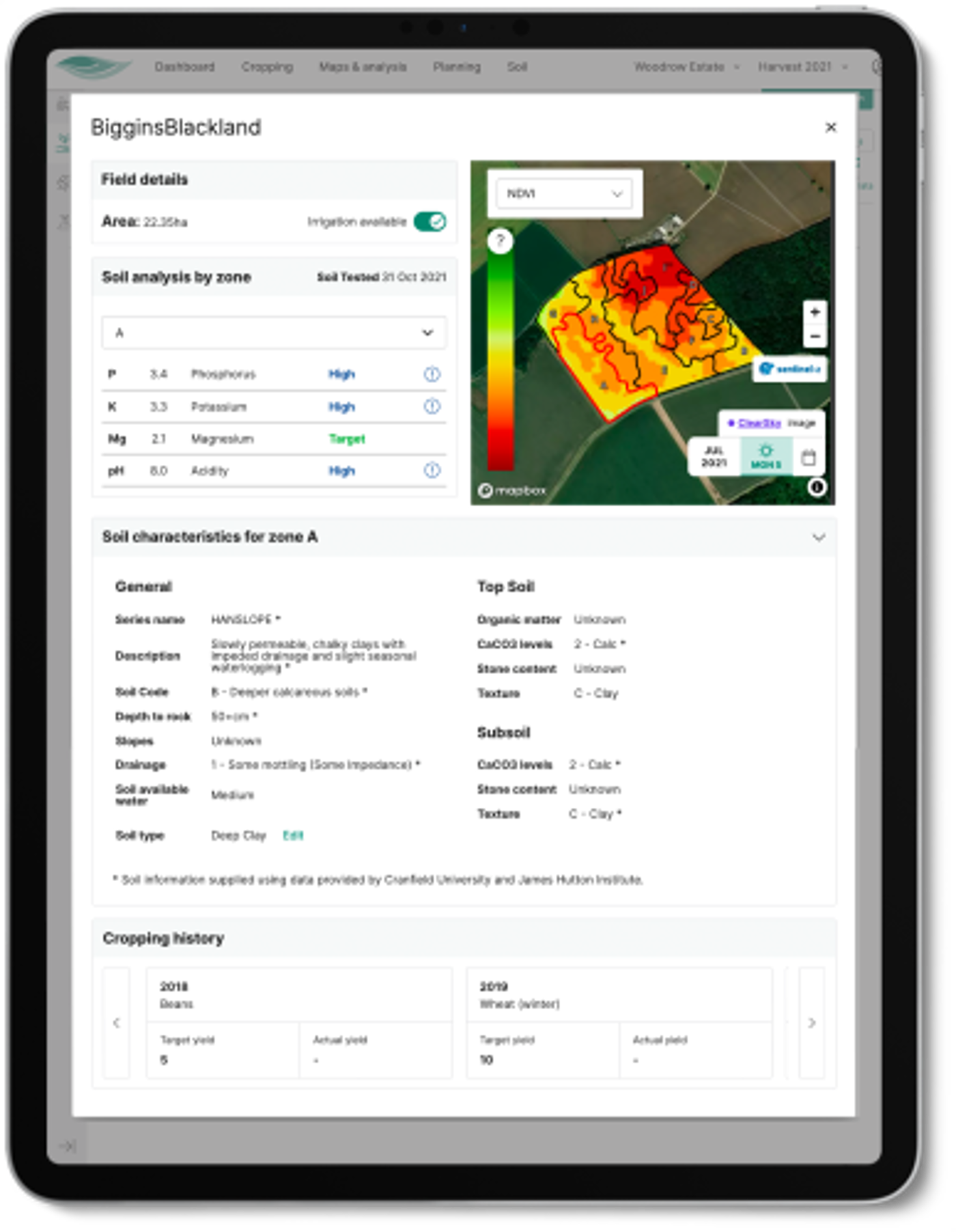
Field-level soil nutrient data to aid decision making
Potash Application Rates
Ensuring the correct application rate for potash is essential for driving yield and generating the best financial return on crops.
Doing this requires taking into account a number of factors, including the type of crop being grown, soil health, and climate conditions.
Therefore, a soil test to check existing potassium levels is crucial before any application.
As a rough guide, pasture and grassland require between 40 and 90 kg per hectare.
Wheat may require 40 to 80 kg per hectare, whereas potatoes might require as much as 175 kg per hectare.
Maize, which tends to need high levels of potash, could require up to 350 kg per hectare.
NPK Ratio
Another factor to consider when applying potash is the NPK ratio required by the crop.
If you’re applying NPK as a blend, be sure to check the crop’s N and P requirements are being met and if not, top these up with straights of those nutrients
Potash and pH
Soil pH has a significant impact on the availability of potassium to the plant. For example, in alkaline soils, calcium is the dominant positive ion and displaces potassium in the fertiliser, making more potassium available to the crop.
Acidic soils hold less calcium, meaning less displacement takes place and less potassium is available.
So, when it comes to weighing up all the variables to determine how much potash to apply, it is best discussed with an agronomist or by using a digital tool such as the RHIZA app.
RHIZA Digital Farming Knowledge Hub - Practical Guides and Insights
For those looking to explore the detail, we’ve created a growing library of technical guides covering soil performance, crop monitoring, compliance and precision decision support.
Digital Farming Knowledge Hub - Soil and Nutrient Foundations

Agricultural Soil Testing & Sampling

Soil Mapping in Agriculture

EC Levels in Soil - Measurement, Scanning & Testing

The Importance of Soil pH

What is Potash?
