


Using satellite imagery for agriculture
Technology is becoming an integral part of farm life. From farm management software through to state-of-the-art autonomous machinery, the march of technology through the agricultural landscape is reshaping our farming lives.
However, that technology is bringing about great strides in terms of efficiency and productivity and is ultimately helping to ensure farming can remain sustainable in these challenging times.
One of the most valuable technological advances in farming is satellite imagery. By using data from satellites orbiting earth, farmers can now view their land from a perspective never seen before and get a wide variety of valuable information.
This new data helps to inform decision making, optimise farming practices and, most importantly, increase yields and profits.
In this blog, we’ll explore how satellite imagery technology works, how it can be applied in precision farming, and why it is becoming an essential tool for UK farmers.
What is Satellite Imagery Technology?
Once the exclusive preserve of international spy organisations, weather forecasters and the prying eyes of the big internet companies, satellite imagery is now accessible and affordable for farmers and agronomists.
The technology behind satellite imagery involves capturing images of the earth’s surface using an array of high-resolution cameras and sensors. By collecting data from across a wide variety of wavelengths – including visible light, infrared, and thermal radiation – the information can then be used to provide valuable insights about the land, your crops and the wider environment.
Using this data, farmers and agronomists are then able to harvest a deep understanding of key factors such as soil conditions, crop health, grass quality, water availability and much more, leading to actionable insights that help to improve the performance of the farm.
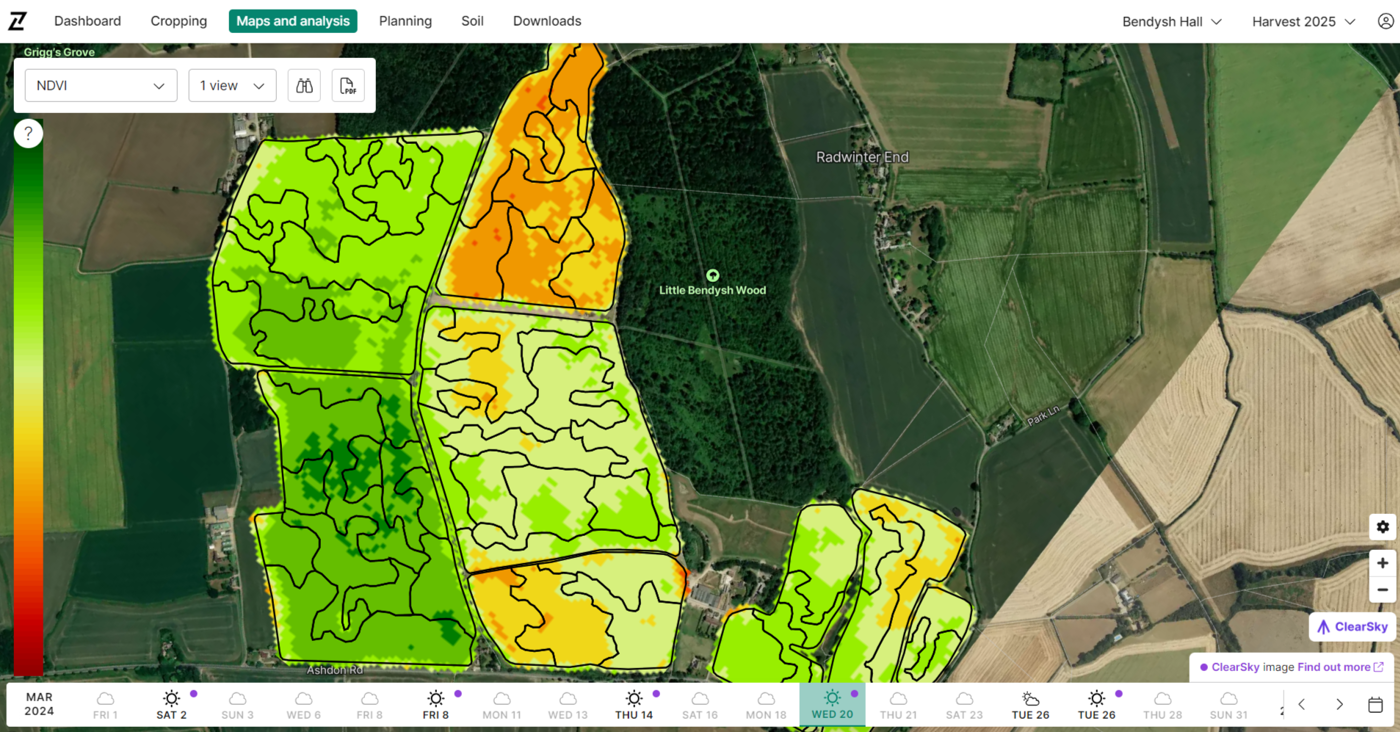
ClearSky Imaging
How Can Satellite Imagery Be Used for Precision Farming?
Precision agriculture is the future of farming. By using data and technology to precisely manage crops and livestock efficiently, it helps to drive efficiencies and improve the productivity of the farm.
Satellite imagery is a critical component of precision farming as it provides access to real-time and historical data that ensures farmers are able to make accurate and strategic decisions.
Here we explore two of the most valuable applications for farmers in using satellite imagery in precision farming.
Crop Monitoring
The traditional field walk has been an integral part of farming since the inception of agricultural practices. It was the most effective way to understand how crops were faring and spot any potential problems.
While being in amongst the crop and on the ground remains an important part of farming life, satellite imagery has the potential to supercharge your understanding of each individual crop.
With the click of a button, farmers and agronomists can now get a complete overview of the entire crop, helping them to monitor development, identify disease risk and any other issues, and see growth patterns in real-time.
The satellite data has a multitude of benefits for crop monitoring. It can help to identify disease and pest outbreaks in the early stages, assess the impact of fertliser regimes, highlight water stress and build a clear map of variations in the field to inform wider precision agriculture practices.
Crop Yield Prediction
Another major benefit of satellite imagery is being able to predict crop yields. By understanding what the crop is likely to yield, it empowers farmers to plan and budget accordingly and also helps to build confidence throughout the supply chain.
The real-time information being captured by satellites, coupled with historical data, the weather, trends and crop health, make it possible to accurately forecast what each crop will produce at harvest.
This valuable information not only allows a farmer to manage contracts and market expectations, but also accurately plan for logistics and storage while also providing solid financial foundations for future budgets.
Having this level of understanding about future crop yields also can support future contract negotiations by building trust with customers and this can lead to better prices too.
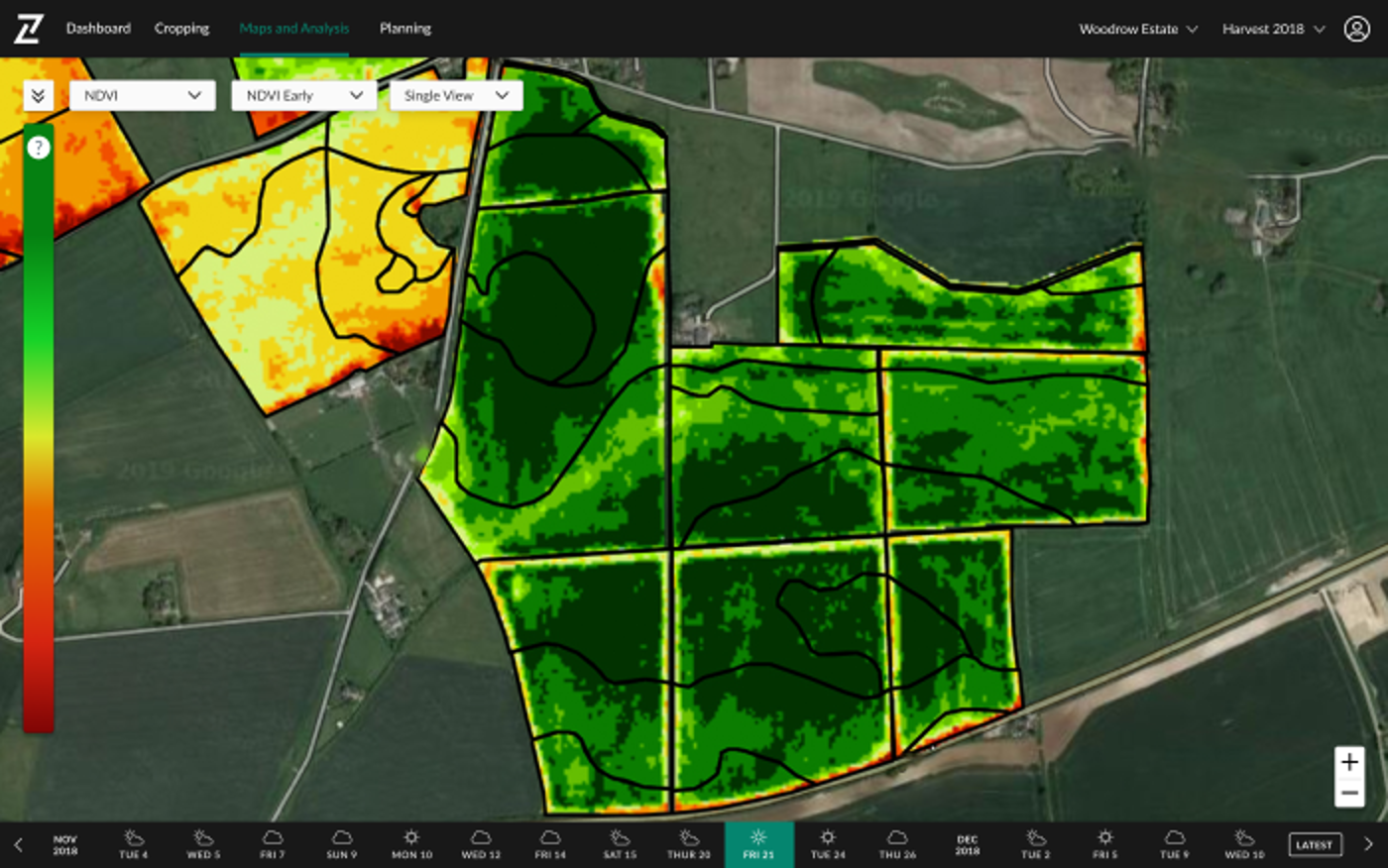
Contour NVDI Satellite Imagery
NDVI in Agriculture
What is NDVI?
In agriculture NDVI, or Normalised Difference Vegetation Index, is a relatively simple but hugely valuable tool that uses satellite imagery to measure the health and density of vegetation on the land.
NDVI is becoming a popular metric that helps farmers to understand crop growth and quickly identify any areas that need support and attention.
By using satellite imagery, NDVI is calculated by measuring the difference between near-infrared (which vegetation strongly reflects) and red light (which vegetation absorbs). The resulting index ranges from -1 to +1, with higher values indicating healthier, more robust vegetation.
For example, negative values would suggest water or snow-covered ground, values close to zero represent barren ground or sand, low positive values show shrubs and grassland, and the highest result would be dense vegetation like tropical rainforests.
For farmers, this NVDI index can provide a simple, yet accurate, measurement that provides valuable insights around crop health, growth rates and yields and can also be used to quickly identify key issues like water stress or poor fertilisation.
Crop Health Monitoring
The primary benefit of NVDI is linked to monitoring the health of crops. By regularly monitoring NVDI, farmers will quickly identify any potential issues and be able to act to protect yields.
Using the satellite data, lowering NVDI values would indicate declining crop health and could identify poor growth, the outbreak of disease or insufficient nutrition.
This information then helps the farmer to apply targeted treatments, like fertiliser or pesticides or implement new irrigation schedules
.
Biomass Monitoring
Another key benefit of the NVDI index is biomass monitoring as this can be used to predict crop yields.
A higher NVDI index, shows improved density and vitality of the crop and this information is crucial for understanding how much biomass is present in a field. This information can then be used to predict your potential yields.
Biomass can also be a useful indicator to identify areas of the crop that may need more intensive management or additional inputs.
Using Satellite Imagery to Measure Soil Moisture
With the UK weather constantly swinging wildly from drought to deluge, satellite imagery can also be valuable in helping to track soil moisture levels, enabling more precise irrigation management.
By using the satellite data to identify areas that are too dry or excessively wet, farmers can optimise water use, reducing waste and promoting healthier crops.
Using Satellites in Agriculture to Track Climate and Weather Patterns
Satellite weather data is a recognised, trusted and invaluable part of farming life and has been used for decades to plan accordingly. However, satellite weather data is another key component that can incorporated into precision farming tools.
By using the valuable satellite imagery insights to predict key weather events, this information can then be used to shape precision farming activity, ensuring better crop resilience and productivity.
The Benefits of Satellite Imagery for Farmers
Satellite imagery has been a major driving factor in the precision agriculture revolution and provides valuable, farm-level data like we’ve never seen before.
From field mapping, soil moisture and climate conditions through to crop health, disease detection and yield predictions, this data is helping farmers to make better informed decisions and drive efficiencies across their farm.
Not only does this deliver cost savings and increase yields, but it also helps to protect against risks and boost environmental sustainability.
Crucially, satellite imagery also helps to make farming more sustainable. The valuable data empowers farmers to plan for the future more accurately and this helps to build more robust farming operations that aren’t as vulnerable to sudden changes in the climate – be that environmental, financial or political.
To fully leverage satellite imagery, partnering with agronomy experts who understand data analysis and interpretation is essential. At RHIZA, we are committed to helping farmers embrace innovative technologies that drive success and sustainability.
If you’d like to learn more about how you can fully leverage satellite imagery into your farming operation, speak to one of our specialists today.
RHIZA Digital Farming Knowledge Hub - Practical Guides and Insights
For those looking to explore the detail, we’ve created a growing library of technical guides covering soil performance, crop monitoring, compliance and precision decision support.
Digital Farming Knowledge Hub - Precision Agriculture Tools

Precision Agriculture

Using Satellite Imaging

What is Yield Mapping

Using Crop Growth Models

Crop Management Systems

Benefits of Using a Scouting APP
