


The Importance of Soil pH in Agriculture for Different Crops
Soil pH is an essential component of soil health and has a significant impact on nutrient availability to emerging crops.
Although most plants thrive in a relatively neutral pH environment, different crops prefer different levels of acidity and alkalinity, meaning steps might need to be taken to alter the pH of your soil in accordance with the crop’s preference.
In this article, we will look at what pH actually is, ways to measure and alter it, and the pH guidelines for some of the most popular crops grown in the UK.
What is soil pH?
Soil pH refers to the level of acidity or alkalinity of the soil. The pH scale ranges from 0 to 14 with a pH of 7.0 being neutral. A pH value level of less than 7.0 is acidic and a pH level greater than 7.0 is alkaline. The lower the pH, the stronger the acidity and the higher the number the more alkaline the soil is.
Acidic vs Alkaline soil
The characteristics of acidic and alkaline soils differ significantly. Acidic soils, for example, tend to have reduced soil microbe activity due to the harsh environment it creates, and this leads to less organic matter breakdown and less nutrients available to the plants.
As a result, crops grown in acidic soil tend to be stunted, slow to develop, and develop yellow leaves. Acidic conditions can be caused by heavy rainfall washing nutrients out of the soil. Soil decomposition can produce acids, and the overuse of chemicals can also cause soil pH levels to drop. However, overly alkaline soils also produce sub-optimal growing conditions, and tend to produce:
- Reduced levels of iron, zinc, copper, and manganese
- Yellow discolouring of the leaves
- Reduced crop yields
Some factors which cause soil to have an alkaline pH level are drier climates with less rainfall, poor drainage and the use of certain fertilisers. Soils in areas where limestone and chalk are present often have higher pH levels.
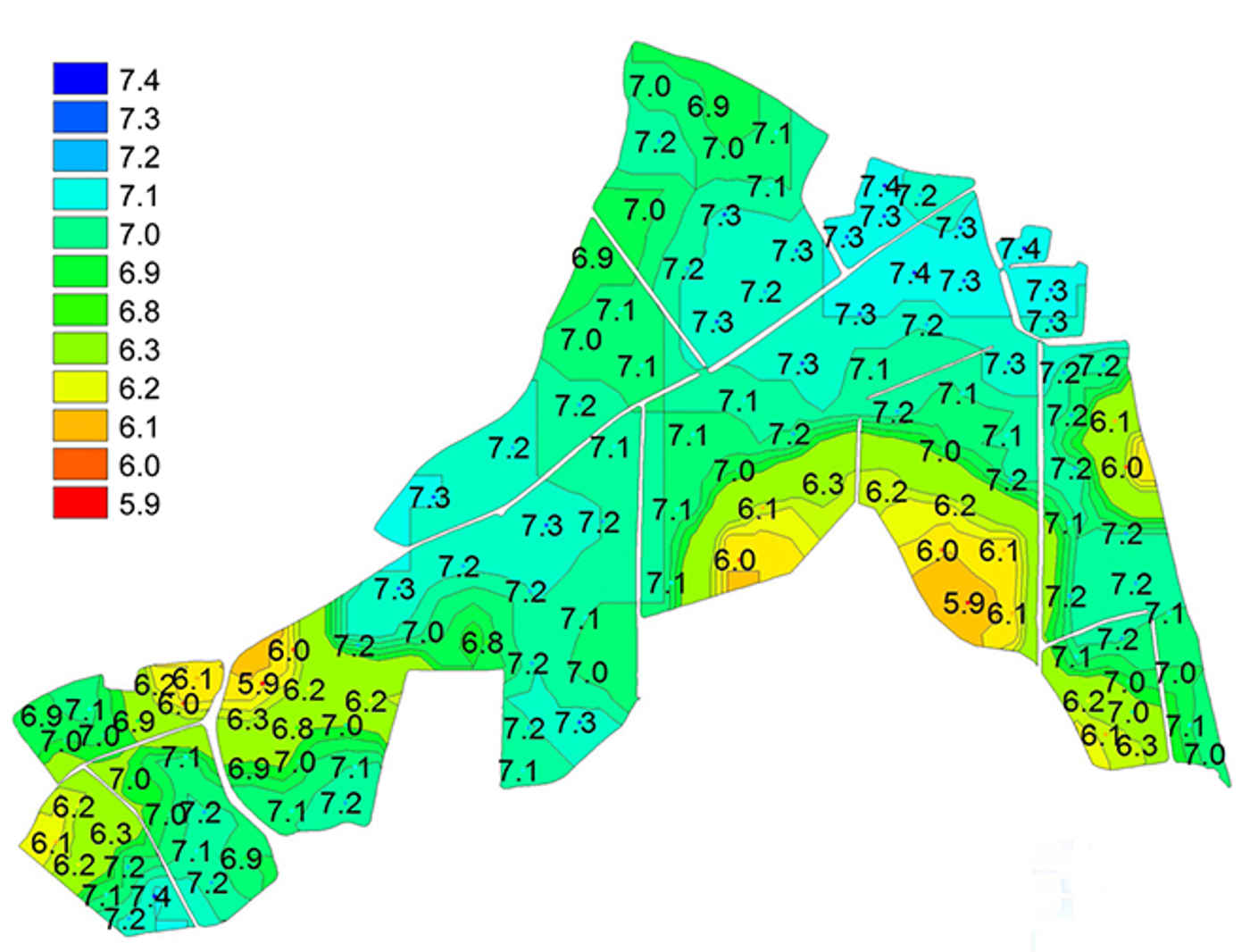
RHIZA Soil pH testing map
How to Measure Soil pH in the Field
It is important to know and understand the pH of the soils on your farm before you plan cropping. This ensures you can prepare the ground properly and create the best possible environment for the crop you intend to grow. There are a number of ways it can be tested.
For a quick and on the spot pH reading, you can use test strips. To do this, simply mix the soil with the solution provided in the test kit and then dip the litmus paper (also provided) into the solution. The strip will change colour and can then be compared to the pH chart which will be provided with the testing kit. Test strips are by far the cheapest way to test soil pH, and on the whole, are fairly accurate.
However, if you don’t want to mess around mixing soil into a solution, electric probes are also available which enable quick and easy pH measurement on farm. For the most accurate readings, however, sending soil samples off for laboratory analysis is best.
For the most comprehensive readings, walk the field you are sampling in a ‘W’ shape and stop at various points to collect soil from underground using a gouge corer or screw auger.
The ideal depths to collect from are between 15 and 23cms for arable and horticultural land and 7.5cms to 15cms for grassland. Put the soil into a clean bag or bucket and then send it away for analysis.
How to Increase Soil pH
If you have acidic soil and need to increase the pH level, the most common method is to apply lime-based products such as chalk and ground limestone – this contains magnesium so will also help if your soil is lacking in Mg.
The lime reacts with hydrogen ions in the soil to reduce the acidity and raise the pH level. Another less common way to raise the pH is with wood ash as it contains potassium carbonate. While it does work, results can be more uneven or sporadic.
How to Lower Soil pH
Lowering soil pH is far more difficult and expensive than increasing it and in the vast majority of cases, farmers manage issues around high soil alkalinity rather than try to alter the pH of the soil. This might include applying nutrients little and often to avoid the nutrient block that comes with high alkalinity, or applying products that prevent lock-up or that help to improve the availability of nutrients to the crop.
However, that’s not to say that are some methods that can be employed to lower soil pH, even if they’re not particularly common. Applying sulphur is one method, as soil microbes convert this to sulphuric acid, lowering the soil pH.
Aluminium sulphate is another solution and is fast acting, but can quickly build up to toxic levels. Ferrous sulphate (sulphate of iron) works similarly but large quantities are needed compared to sulphur so it can be expensive. Ammonium based fertilisers will also make soil more acidic over time.
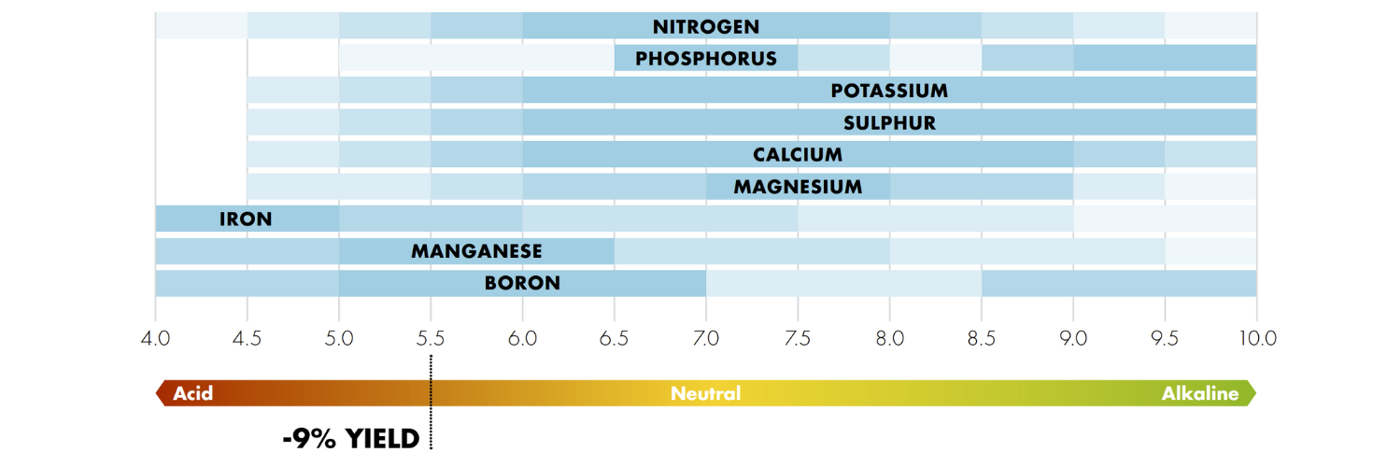
pH and nutrient availability in soil
At which pH do most crops grow best?
As already mentioned, different crops require different pH levels to thrive. Here is a round-up of some of the most commonly grown crops and the pH levels at which they grow best.
Potatoes
Potatoes are one of the few vegetables that prefer more acidic soil so a pH level of 6.5 or less is required. Optimum pH levels for potatoes are between 5 and 6.
Barley
Barley requires a soil with a balanced level of nutrients and will do well in soil with a pH level between 6.0 to 7.5.
Wheat
Wheat can be grown on most soil types but does require a pH level of around 6.5 for optimal yields.
Beans
Beans can tolerate a slightly acidic soil with an ideal range between 6.0 and 7.0.
Brassicas
Brassicas will fail if the soil is too acidic. A pH level of 6.5 to 7.5 is optimum for these vegetables.
Maize
Maize does not perform in acidic soil so the higher the pH level the better for this crop. Soil with a pH level of 6.0 to 7.2 is ideal but maize has been known to grow in soil with a pH of 8.5.
Peas
Peas grow best in an environment that is neutral to slightly alkaline, with the optimum pH level being between 6.0 and 7.5.
Carrots
The optimum pH level for growing carrots is between 5.5 and 7.0. Anything less than 5.5 and the crop is susceptible to phosphate, calcium and molybdenum deficiencies. Anything more than 7.5 and it is likely to be deficient in boron, copper, iron, manganese, phosphate and zinc.
Oilseed Rape
Oilseed rape will tolerate a wide range of soil pH levels with 6.5 to 7.0 considered ideal.
Summary
Understanding soil pH levels is crucial for producing higher yields and healthier crops. A key part of getting this right is regularly testing the pH levels of the soil and adjusting it in line with the requirements of the next crop in your rotation.
At Agrii, our RHIZA service offers a range of digital tools and in-field sampling packages that help you analyse your soil and make more informed decisions about crop and land management. We also have agronomy experts on hand across the country to give advice specific to your needs.
RHIZA Digital Farming Knowledge Hub - Practical Guides and Insights
For those looking to explore the detail, we’ve created a growing library of technical guides covering soil performance, crop monitoring, compliance and precision decision support.
Digital Farming Knowledge Hub - Soil and Nutrient Foundations

Agricultural Soil Testing & Sampling

Soil Mapping in Agriculture

EC Levels in Soil - Measurement, Scanning & Testing

The Importance of Soil pH

What is Potash?
