


NVZ Compliance - Rules, Recording & Using Software to Help
Nitrogen is one of the most important nutrients in crop production but is also widely recognised as a source of pollution to the environment, in particular watercourses.
As a result, Defra has established areas called Nitrogen Vulnerable Zones (NVZ) in which farmers and landowners have to adhere to set rules around the use of the nutrient.
Along with these rules, there is also a requirement to keep vast records to demonstrate compliance, which can be time-consuming and complex.
Thankfully, however, there is a range of NVZ software tools and tips to help make the process, and compliance, easier.
In this article we will look at legislation for the UK, limits and restrictions on using nitrogen as a fertiliser, slurry spreading, record-keeping, useful software and the maps and areas designated as NVZs.
What are Nitrate Vulnerable Zones (NVZs)?
Nitrate Vulnerable Zones (NVZs) are areas deemed at risk from agricultural pollution caused by nitrate fertiliser or organic manure.
NVZs include about 55 per cent of land in England. Defra reviews them every four years to take into account any changes which may have occurred in nitrate levels.
If your farm or land comes under a designated NVZ zone there are rules you must follow which govern where and when inorganic nitrogen and organic manures and slurries can be applied and the records you have to keep.
The Environment Agency enforces NVZ rules and selects which farms to inspect. If you fail to comply with the NVZ rules, you could be prosecuted and fined.
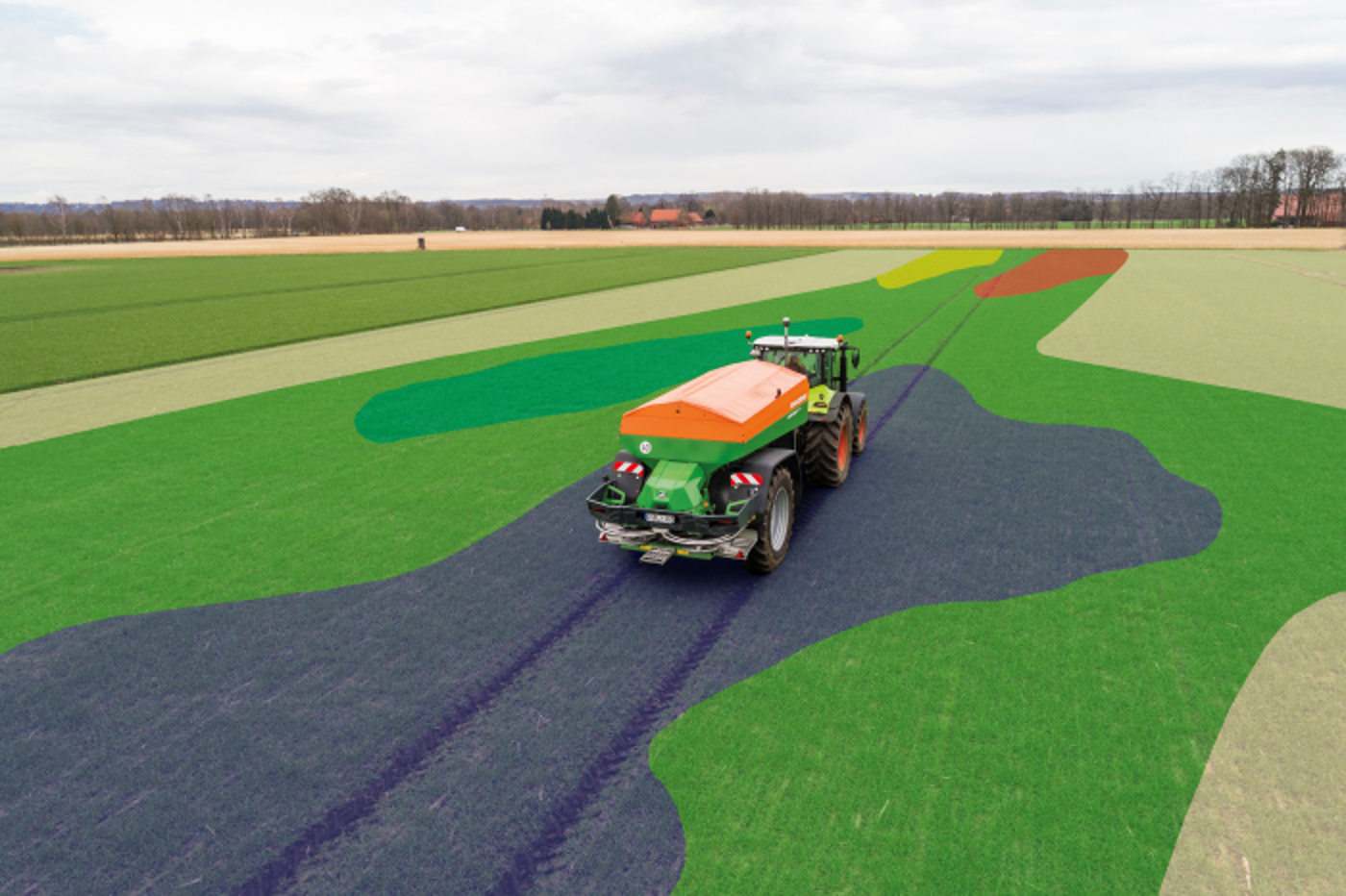
Rules for using nitrogen fertiliser
- Slurry storage
- Spreading dates and closed periods
- The amount of nitrate you can apply
- Record keeping
NVZ slurry storage requirements
According to the regulations, you must be able to store all pig and poultry manure and slurry in a yard or building between October 1 – April 1, and October 1 – March 1 inclusive for cattle, sheep, goats, deer and horses.
Bear in mind, you also have to provide storage for any slurry, rainfall, washings or other liquids entering the store during the storage period.
The compliance process requires you to make slurry storage records covering a number of points, including:
- Capacity of storage facilities on farm (update any changes to this within one week)
- Calculation of the volume of manure produced by the livestock you’ll keep in a building or hard standing during storage period
- Calculation showing amount of storage you need
- Changes in volume and storage capacity due to introducing livestock to farm for first time within a month
- Calculations to show how you’ve reduced volume by sending slurry off farm or spreading.
Each year, by April 30, you need to have produced a record of the numbers and type of livestock kept in buildings/hardstanding during the previous storage period, start and end dates of use, and locations of sites used for storing solid manure.
These records must be kept for five years.
NVZ slurry spreading dates and closed periods
Assessing the risk of nitrogen getting into water courses must be done before any spreading of fertilisers or organic manures takes place, and weather conditions also need to be taken into account.
You cannot spread manufactured fertilisers or organic manures if a field is waterlogged, flooded or covered in snow, or if it has been frozen for more than 12 hours in the previous 24 hours.
Neither can you spread manufactured nitrogen fertiliser within two metres of surface water or organic manure within 50 metres of a spring, well or borehole, or within 10 metres of surface water.
If you have high readily available nitrogen manures there are times, depending upon soil type, when you can’t spread. These are closed periods, and the table below sets out the restrictions*:
|
|
On Grassland |
On Tillage land |
|
Sandy or shallow soil |
Sep 1 to Dec 31 |
Aug 1 to Dec 31 |
|
Other soils |
Oct 15 to Jan 31 |
Oct 1 to Jan 31 |
Closed periods also exist for the spreading of inorganic nitrogen fertilisers. You can’t spread inorganic nitrogen on grassland on or between September 15 – January 15. For tillage land, the dates are September 1 – January 15.
However, there are exceptions to these closed periods for certain crops which are outlined in the table below.
|
Crop |
Maximum amount of nitrogen you can spread within the closed period on each hectare |
|
Winter oilseed rape |
30kg (do not spread nitrogen after October 31) |
|
Asparagus |
50kg |
|
Brassica |
100kg (no more than 50kg can be applied every four weeks, up to the date you harvest the crop) |
|
Grass |
80kg (you can apply a maximum of 40kg at any one time, and must not spread after October 31) |
|
Over-wintered salad onions |
40kg |
|
Parsley |
40kg |
|
Bulb Onions |
40kg |
NVZ and NMAX
Within NVZs there is a limit on the average amount of manufactured fertiliser and crop available nitrogen from organic manure you can apply to most crops each year - this is called the NMAX limit.
The following table shows the actual NMAX limit in kilograms of nitrogen per hectare and the standard crop yield in tonnes per hectare.
|
Crop |
N-Max Limit |
Standard Crop Yield |
|
Autumn or early winter-sown wheat |
220 |
8 |
|
Spring-sown wheat |
180 |
7 |
|
Winter Barley |
180 |
6.5 |
|
Spring Barley |
150 |
5.5 |
|
Winter oilseed rape |
250 |
3.5 |
|
Sugar beet |
120 |
- |
|
Potatoes |
170 |
- |
|
Forage maize |
150 |
- |
|
Field Beans |
0 |
- |
|
Peas |
0 |
- |
|
Grass |
300 |
- |
|
Asparagus, carrots, radishes, swedes, individually or in any combination |
180 |
- |
|
Celery, courgettes, dwarf beans, lettuce, onions, parsnips, runner beans, sweetcorn, turnips individually or in any combination |
280 |
- |
|
Beetroot, brussels sprouts, cabbage, calabrese, cauliflower, leeks individually or in any combination |
370 |
- |
There are some exceptions to these amounts where you can apply more nitrogen to certain crops if your expected yield is higher than the standard crop yield.
You can also use an additional 80kg of nitrogen per hectare if you’ve used straw or paper sludge on the previous or current crop.
Other allowances include:
Wheat and barley
Allowed an additional 20kg of nitrogen per hectare for every tonne where expected yield exceeds standard yield.
Milling Wheat
An additional 40kg/h of N can be applied to milling wheat.
Wheat and barley
On autumn and winter-sown wheat and winter barley, an additional 20kg/h of N can be applied to fields with a shallow soil type (except over sandstone).
Winter oilseed rape
Up to 250kg/h of N can be applied to OSR. This includes a maximum autumn (closed period) application of 30kg/h of manufactured nitrogen fertiliser.
This means that if you use 30kg of nitrogen per hectare in the autumn, you can only use up to 220kg of nitrogen per hectare in spring. You can increase this by an additional 30kg of nitrogen per hectare for every half tonne of yield expected above the standard yield.
Grass
An additional 40kg/h of N can be applied to grass cut at least three times a year.
When it comes to organic manure, you can use up to 170kg/h of N from livestock manure (including manure deposited directly by livestock and spreading) on your holding in each calendar year. This is known as the loading limit and applies as an average across your holding.
It’s separate from the field limit of 250kg per hectare from organic manures.
However, you cannot exceed 250kg of total nitrogen from all organic manures spread in any 12-month period on any single hectare of your land. This limit (the field limit) doesn’t include livestock manures deposited by grazing animals.
NVZ maps, areas, and zones
If you spread organic manure on your land, you need to make a risk map and keep it with your farm records. It can be hand-drawn or printed and doesn’t need to be to scale, but should include:
- Location and size of each field in hectares; sandy or shallow soils; slopes more than 12 degrees
- Land drains (except sealed and impermeable)
- Site where you plan to use temporary field heaps to store manure
- All surface waters (such as streams or ponds) and land within 10 metres; springs, wells and boreholes on your land or within 50 metres of the boundary; all land within 50 metres of a spring, well or borehole; low run-off risk land (if you intend to spread here to reduce amount of storage).
If you make any changes, you must update the map within three months of doing so.
Record keeping and software
If you farm within an NVZ, it is vital to keep records of all fertiliser use for a minimum of five years. Records must also be updated on a regular basis. For example, you must update your field records within a week of sowing, spreading fertiliser or harvesting a crop.
Crop types, dates, and amount of fertiliser used must all be documented, and when using organic manures, the type of manure, method used for spreading, total nitrogen and crop-available nitrogen must all be recorded.
Records must also include evidence of soil nitrogen supply and crop nitrogen requirements, how you calculated them and any written advice from a FACTS-qualified adviser.
Results from lab reports for sampling and analysis of nitrogen content in organic manure need to be recorded within one week of receiving the results.
Record Keeping Software
Recording all that data may feel like a mountainous task, but thankfully there are software tools available to help farmers and land managers keep track of the information required.
RHIZA’s Contour platform not only enables farmers to record all this information digitally, it includes data from Cranfield’s National Soil Map on all soil types in the UK, which can be used to carry out all NVZ calculations, including NMAX.
By creating a visual representation of NVZs, farmers can better understand and plot their N applications more easily and accurately, and alerts users to non-compliant activities, so these can be corrected.
*All dates and volumes are accurate at the time of writing.
RHIZA Digital Farming Knowledge Hub - Practical Guides and Insights
For those looking to explore the detail, we’ve created a growing library of technical guides covering soil performance, crop monitoring, compliance and precision decision support.
Digital Farming Knowledge Hub - Compliance and Regulation

NVZ Compliance
