


Measuring, Scanning, & Testing Soil EC Levels
The electrical conductivity (EC) of soil has a huge impact on crop development, yield, and plant health. Therefore, ensuring it remains within an acceptable range is essential for maintaining good soil health and producing saleable crops.
But what is it and how can it be controlled and measured?
In this article, we dig into soil EC to find out what factors influence it, the impact it has on crops, and how it can be optimised.
What are EC levels and why should they be tested?
The soil EC level is a measure of the electrical conductivity of soil. This might sound very odd, but yes, soil can conduct electricity.
It can do this because it contains ions dissolved in water within the soil. Ions are charged particles that are often in the form of salts, and it is these that give the soil its ability to conduct electricity.
Because it is the salts dissolved in water that gives soil its conductivity, it follows that measuring soil salt concentrations will give an accurate measure of soil EC levels.
As a result, EC levels can be measured in several ways, including:
- Handheld EC meter. This uses a prob that is inserted into the soil to take a reading.
- Soil lab analysis. Lab samples are measured via a very sensitive conductivity meter and as a result, give very accurate readings.
- Soluble salt test strips. A very quick and cost-effective way of taking a soil EC measurement, these are paper strips that change colour on contact with the soil. EC is measured by comparing the colour change with a chart.
- Soil moisture sensor. As the salts are dissolved in water, measuring the moisture content of the soil can be used to measure soil EC levels.
The standard unit of measurement for electrical conductance is the Siemen and soil EC is measured in terms of Siemens per unit of area of soil. Usually, this is expressed as milliSiemens per linear centimetre or mS/cm.
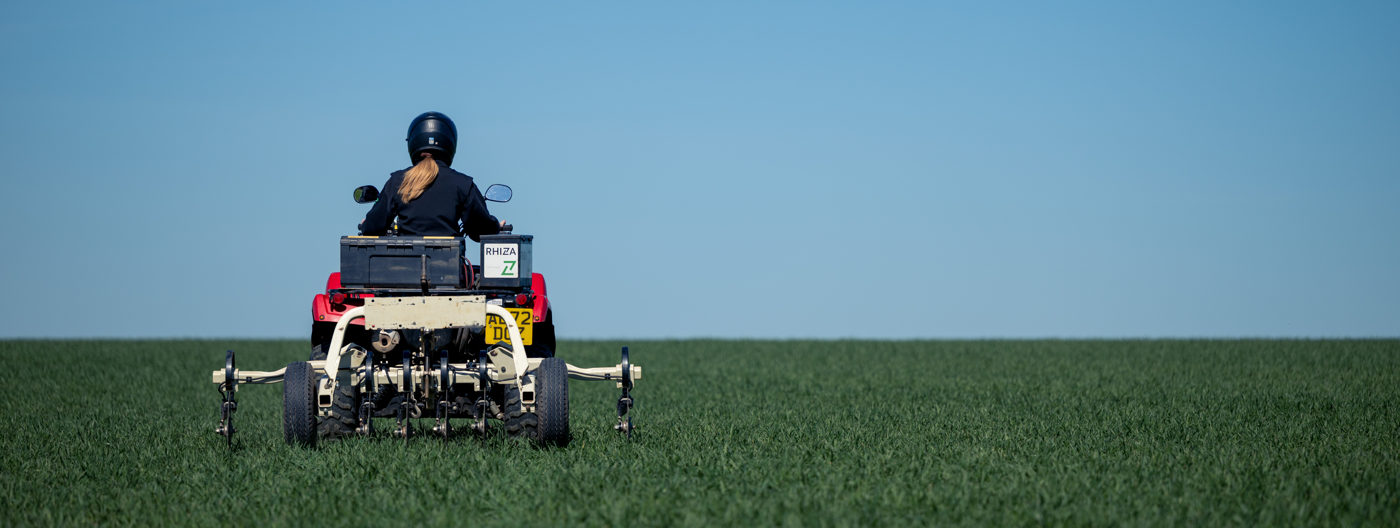
Soil salinity
Of course, salt concentrations are not just a measure of the EC of soil, but also the salinity. High soil salt levels – i.e. high soil salinity – causes major issues for crops including reduced yield and compromised plant health.
So, when testing soil EC levels, it is not actually the soil’s ability to conduct electricity that is of interest. This serves as a good measure of the salt content and therefore the salinity of the soil, and it is this which needs to be monitored.
The importance of EC in soil
Because EC, or soil salinity, has such a huge impact on crop health and development, understanding and measuring it is vital to a successful farming operation.
One of the biggest issues relating to EC levels is water uptake by plants. Water is taken up by plant roots in a process called osmosis, which is where water molecules move from an area of low salt concentrate to an area of high concentrate, to balance salinity across a membrane. Because the concentration of salts is normally higher within the plant root than it is the surrounding soil, water moves from the soil, across the root membrane, and into the plant, carrying essential nutrients with it.
However, if the salinity of the soil rises too high, the reverse process will take place. Water will pass out of the root and into the soil to try to create a balance between the salinity within the root and that in the soil.
This makes it impossible for plants to take in the nutrients and water they need for growth, resulting in nutrient deficiencies, yellowing, disease, and lower yields.
Other issues caused by high salinity include damage to soil structure and reduced microbe activity.
High soil salt levels can cause soil particles to disperse away from the surface, leaving a hard crust. This crust can then become impermeable to water and can inhibit crop establishment due to reduce root penetration.
High salinity also creates a harsh environment for soil microbes, which are essential for nutrient cycling, organic matter decomposition, disease suppression, and plant symbiosis. Increasing salinity undermines the balance of microbes, favouring salt tolerant species which replace those that are less salt tolerant and therefore diminishing microbe activity.
How to increase of lower EC levels
Of course, knowing the EC level of your soils is one thing, but what do you do if they are too high or too low?
Managing soil salinity is key to producing healthy crops and therefore must be monitored regularly, preferably once a week, and appropriate actions taken to ensure it is within set range.
Before this can take place, however, it is important to know what constitutes healthy EC levels in UK soils. Whereas natural salinity does vary between clay and sandy soil, in most areas of Britain normal EC levels are between 1.2 and 2.4 mS/cm during the vegetative period of a plant’s life, and between 1.8 and 2.8 mS/cm in the flowering stage*. See note at end.
This can differ between crops but using these figures as a guide should mean the salinity of your soil remains within an acceptable range.
If salinity is too low, this is usually indicative that the soil is nutrient deficient which will lead to poor plant health, disease, and low yields.
As already discussed, soil with a high EC reading will mean plants cannot take in the water and nutrients they need, and ultimately a toxic environment will be created in the soil in which the crop cannot thrive.
Correcting a low EC is a relatively straightforward process. It generally involves adding salts and nutrients in the form of inorganic fertiliser or organic slurries and manures.
Because low EC levels are an indication nutrients are in short supply, adding them to the crop generally solves the problem.
However, this also demonstrates the value of regularly monitoring EC levels. Without this, low salinity might be missed before the plants start showing symptoms such as yellowing of the leaves. By this point, the crop has already suffered some stress which is likely to impact its future performance.
High EC levels can be avoided by always ensuring you apply the correct amount of fertiliser. Too much fertiliser can soon see salt levels in the soil build up, pushing EC levels higher.
Correcting this requires diluting the salt concentration of the soil, and this is usually done by irrigation. Irrigation helps to wash the excess salts out of the soil, bringing down salinity. However, it is vital to ensure that the water applied during irrigation does not have a lot of dissolved salts already present, as this will exacerbate the problem rather than solve it. So, EC testing your irrigation water is also advised.
Continuing to monitor EC levels during and after irrigation is also vital, to ensure salt concentrations reach and are maintained at optimum levels.
If it slips outside the normal range again, then add either nutrients or more water, depending on whether the levels are too high or too low.
Summary
Soil EC is a measurement of the electrical conductivity of soil, which is directly related to the concentration of dissolved salts within the water in the soil.
The level of soil EC has a major impact on crop health and therefore ensuring it remains within the correct parameters is essential.
Thankfully, cost-effective measuring solutions exist that enable farmers and agronomists to regularly check EC levels and devise a correction strategy if levels fall outside the optimum.
Broadly, if EC levels are too low, the addition of fertiliser or organic manures will bring the salt concentration back into line with targets. Too high levels of EC can be addressed by diluting the soil with water, via irrigation.
However, as incorrect EC levels can have such a huge impact on crop health and yield, it is important to take expert advice if the measurements you take suggest there is a problem.
For more information or to speak to us about correcting EC levels, get in touch.
ENDS
*I found these values via a Google search on what appeared to be a credible website. However, I have seen other value quoted so if these are incorrect, please replace with correct EC levels.
RHIZA Digital Farming Knowledge Hub - Practical Guides and Insights
For those looking to explore the detail, we’ve created a growing library of technical guides covering soil performance, crop monitoring, compliance and precision decision support.
Digital Farming Knowledge Hub - Soil and Nutrient Foundations

Agricultural Soil Testing & Sampling

Soil Mapping in Agriculture

EC Levels in Soil - Measurement, Scanning & Testing

The Importance of Soil pH

What is Potash?
