


Why Crop Management Systems & Planning Software are Essential
For a modern farming operation to be successful, it takes much more than traditional methods and manual labour.
As with all other industries, technology is playing a fundamental role in farming, driving improvements in farm performance while generating efficiencies in time, costs, and manpower.
One area where technology is having a major impact is integrated crop management and planning.
Innovative software systems are not only capable of capturing data on soil nutrition and health, they can also predict weather patterns to a high degree of accuracy, and by automating various processes, can provide a solution to labour shortages.
All of this combines to help the grower make better, more informed crop management decisions.
In this article, we take a closer look at integrated crop management and how technology is helping to drive improvements on farm.
Effective crop management in agriculture
But before we get into the technology now available, it is important to understand what a crop management system is as this will provide a greater understanding of how software systems can fit into one, and the value they bring.
Effective crop management involves planning and managing all aspects of crop husbandry – from pre-drill to post-harvest – to generate the healthiest, most profitable crop whether grown for yield or quality.
It involves managing soil health, crop nutrition, pest control, and water resources all in the context of the prevailing environmental conditions, particularly the weather.
Traditionally, this has been guided by farmer and agronomist knowledge, experience and judgement. But increasingly, technology in the form of sensors, software programmes and apps are being used to supplement experience with up-to-the-minute data from the field.
By combining these two approaches – traditional and modern – into an integrated crop management (ICM) approach, more informed, effective decisions can be made on farm, leading to improved outcomes and more profitable crops.
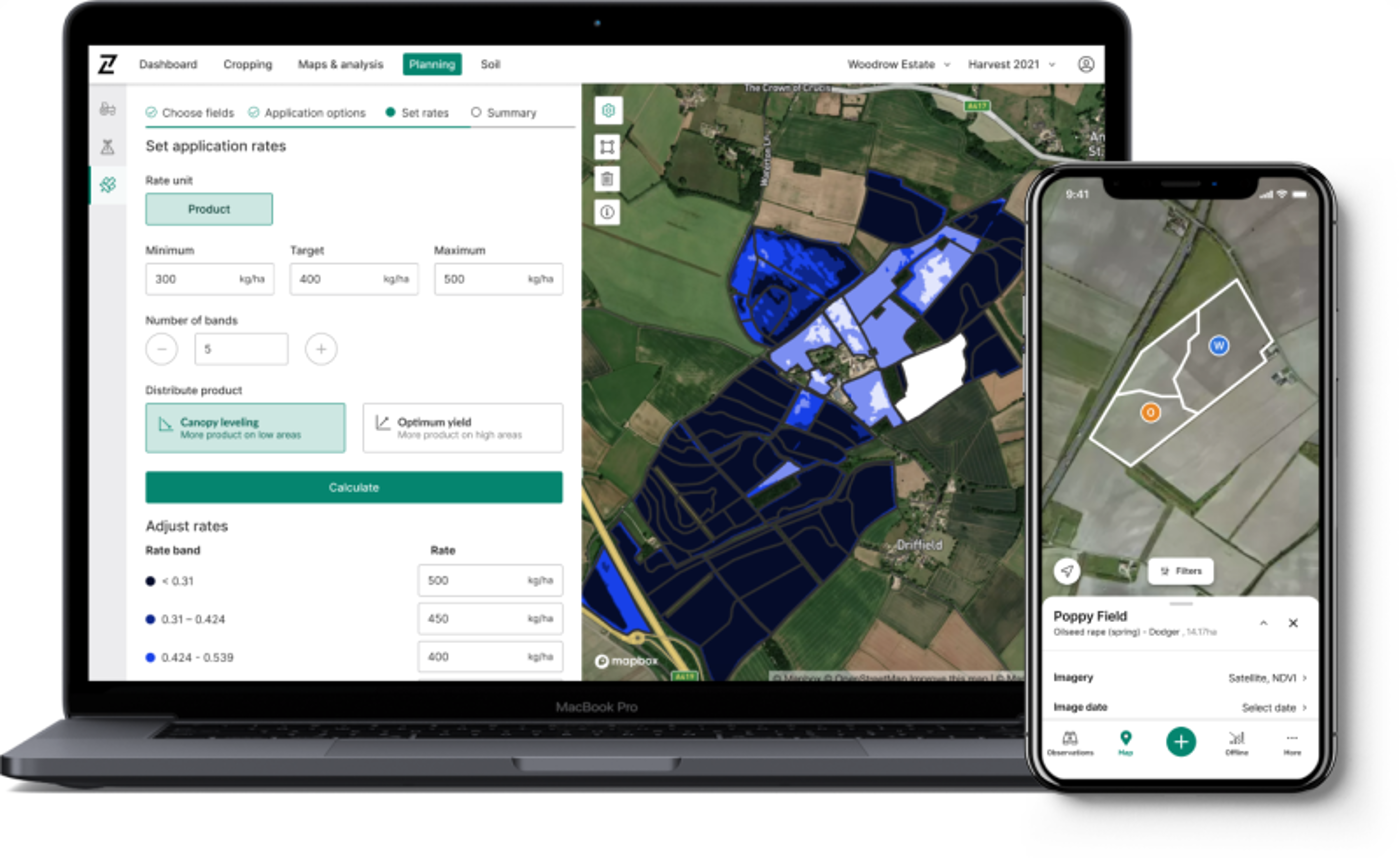
The importance of integrated crop management
Integrated crop management (ICM) takes a holistic approach to producing crops – that is, it combines the hard science of data collection and analysis with the judgement and experience of seasoned farmers and agronomists.
The objective of this approach is to increase the efficiency of crop input use, such as fertiliser, herbicides, pesticides, and water, to reduce the cost and environmental impact of growing crops, while maintaining or improving yield.
Ultimately, ICM is about sustainability – environmental sustainability by reducing carbon emissions and the runoff of crop inputs onto surrounding habitat, and the long-term financial sustainability of the farming business.
Key pillars of ICM include:
- Crop rotation
Using different crops in sequence to improve soil health, reduce pest and disease pressure, and enhance nutrient cycles. - Crop protection
Employing a variety of methods to manage pests and diseases, including biological controls, crop rotation, and targeted chemical applications rather than blanket applications of herbicides and pesticides. - Crop nutrition
Taking a precision approach to applying fertilisers and amendments in a way that is tailored to the crop’s needs, helps farmers manage costs, and minimises environmental impacts. - Pollution control
Implementing practices to reduce runoff of inputs into waterways and to minimise air pollution. - Energy efficiency
Using energy-efficient equipment and practices to reduce diesel and other fuel usage. - Conservation of habitat and wildlife
Protecting and enhancing biodiversity on the farm by creating habitats for beneficial insects, birds, and other wildlife. - Record keeping
Monitoring and evaluating the effectiveness of ICM practices over time to make informed decisions about future cropping.
ICM and technology
To achieve these objectives, there are a range of technologies, some already in existence, some emerging, that are available to farmers.
Generally, they fall into three categories – sensors that collect data, software programmes and apps that analyse and interpret the data, and farm machinery that receives the data and carries out actions based on them.
In-field sensors collect data such as soil nutrient levels, moisture, and crop vigour, and combine this with data from remote sensors, such as satellite imagery and drone technology, which monitor crop emergence and development.
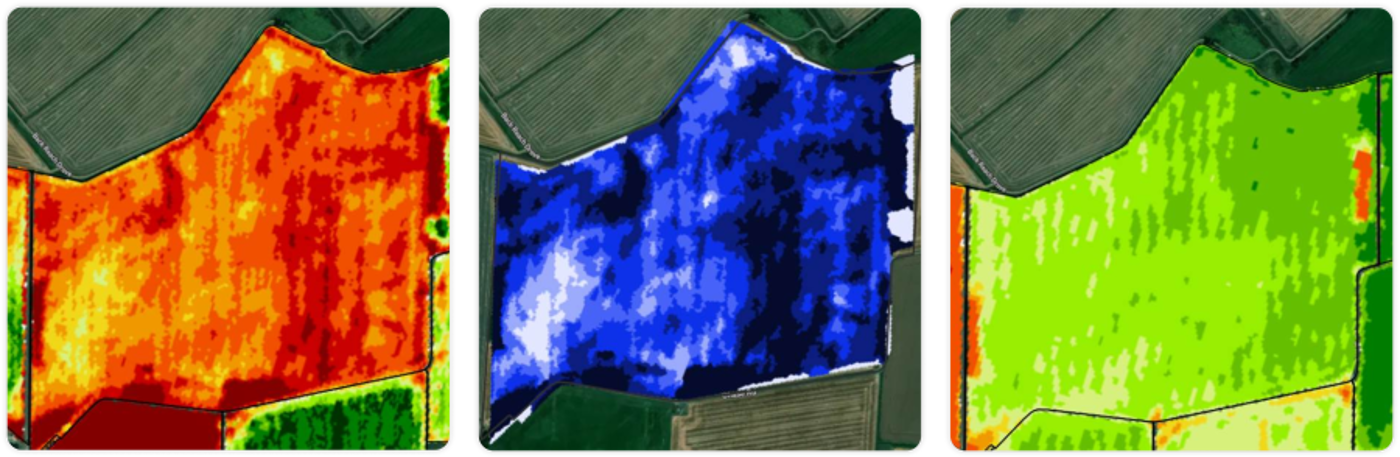
This data is analysed by various software programmes to produce farm and soil maps, detailing where crops inputs are needed and in what quantities – and crucially, where they are not needed.
This information is then used by the farm machinery to apply the correct amounts of inputs at exactly the right locations.
Benefits of using Crop Management Software and Apps
The main advantage of using management software and apps is it takes the guesswork out of growing crops.
The data collected by these technologies provides an accurate picture at whole-farm level, enabling farmers and growers to identify the best crops to grow where, and to monitor them throughout the entire growing cycling to optimise the application of key inputs.
This means greater resource efficiency, both in terms of the inputs themselves and in terms of labour, which leads to cost savings and reduces environmental impacts.
Although technological advances are helping to revolutionise many aspects of farming, from increasing biodiversity to continually monitoring livestock health, it is in crop production that the biggest progress is being felt.
Data collection and technology are particularly instrumental in the following areas:
- Crop Planning
Crop planning software maps soil types across your farm, as well as key properties such as nutrient and moisture content, and soil organic matter, to enable key decisions around what to plant where.
- Crop Tracking
Once a crop has emerged, technology can now be used to fully monitor health and performance on an ongoing basis.
Field sensors, drones, and land-mapping tech, for example, can save hundreds of man hours by collecting information on soil nutrient levels, crop development, weather conditions and forecasts.
The software then analyses the data and produces management recommendations, enabling growers to make faster, better decisions. - Crop Recording
As well as analysing current data, looking at historical trends can provide significant insights into what will work in the future.
This is another area where technology is revolutionising how farming works.
Software programmes and apps such as RHIZA’s Contour platform are much quicker and better at recognising data trends and drawing conclusions from them than human beings, leading to more accurate insights for growers.
Also, as regulations continue to get more burdensome, employing software solutions for crop recording can help ensure growers always have confidence in compliance. - Crop Rotation
As with other areas of crop management, effective software solutions take the guesswork out of planning your crop rotation.
Land-mapping and profiling technologies, for instance, can map out a range of potential scenarios for various crops on your farm, taking into account specific requirements for yield, cost and profit, emissions and environmental factors.
By combining these data points, deciding which crops to include in the rotation and when becomes much easier.
Summary
Crop management systems are an important element in the success of any arable business.
Whether it is soil mapping, crop performance monitoring, or deciding what crops to plant in future rotations, technology is being increasingly used to make decision making easier and more effective.
From mobile-data, in-field sensors, drones and satellite imagery to software programmes capable of analysing large datasets, and machinery equipped to apply crop inputs only where needed, technology is revolutionising how crops are grown.
This is not only helping farmers to generate greater returns through resource-use efficiency, it also ensures the environmental impact of farming is kept to a minimum.
RHIZA Digital Farming Knowledge Hub - Practical Guides and Insights
For those looking to explore the detail, we’ve created a growing library of technical guides covering soil performance, crop monitoring, compliance and precision decision support.
Digital Farming Knowledge Hub - Precision Agriculture Tools

Precision Agriculture

Using Satellite Imaging

What is Yield Mapping

Using Crop Growth Models

Crop Management Systems

Benefits of Using a Scouting APP
