


BYDV Risk Calculations & Forecasting in Wheat & Barley
Despite its name, Barley Yellow Dwarf Virus (BYDV) affects more than just barley. In fact, it is a common disease impacting on barley, wheat, and oats, with oats being particularly susceptible.
BYDV is also considered one of the most economically damaging diseases in UK cereal growing, with the potential to cause significant yield loss.
Therefore, effective management of the vector and condition is vital.
But what causes BYDV and how can it be managed? And can farmers forecast the risk of being impacted?
In this article, we take a close look at BYDV.
What is BYDV?
Barley Yellow Dwarf Virus (BYDV) is a disease that can have severe impacts on cereal crops, in particular barley, wheat, and oats. It is spread via grain aphids and bird cherry aphids which carry the virus and live on green bridges, volunteer crops or neighbouring vegetation. Once a recently sown cereal crops starts to emerge, they simply walk on to it to begin colonisation.
However, both these aphid varieties can also fly, so can infest crops where stubbles, volunteer crops and surrounding vegetation are absent, either by flying directly to them or by being blown on the wind.
Because it requires aphids as a vector, BYDV thrives in warm, moist conditions.
Initially, vector aphids colonise relatively few crop plants. The real problem arises when the second generation of the pests emerge. These can spread from the original host plant and into the wider crop, either infecting defined patches of the crop or large swathes of it, depending on the level of infestation.
Although there are strategies to manage the BYDV, there is no cure. So, once your crop is infected, measures must focus on damage limitation to reduce potential yield and financial losses.
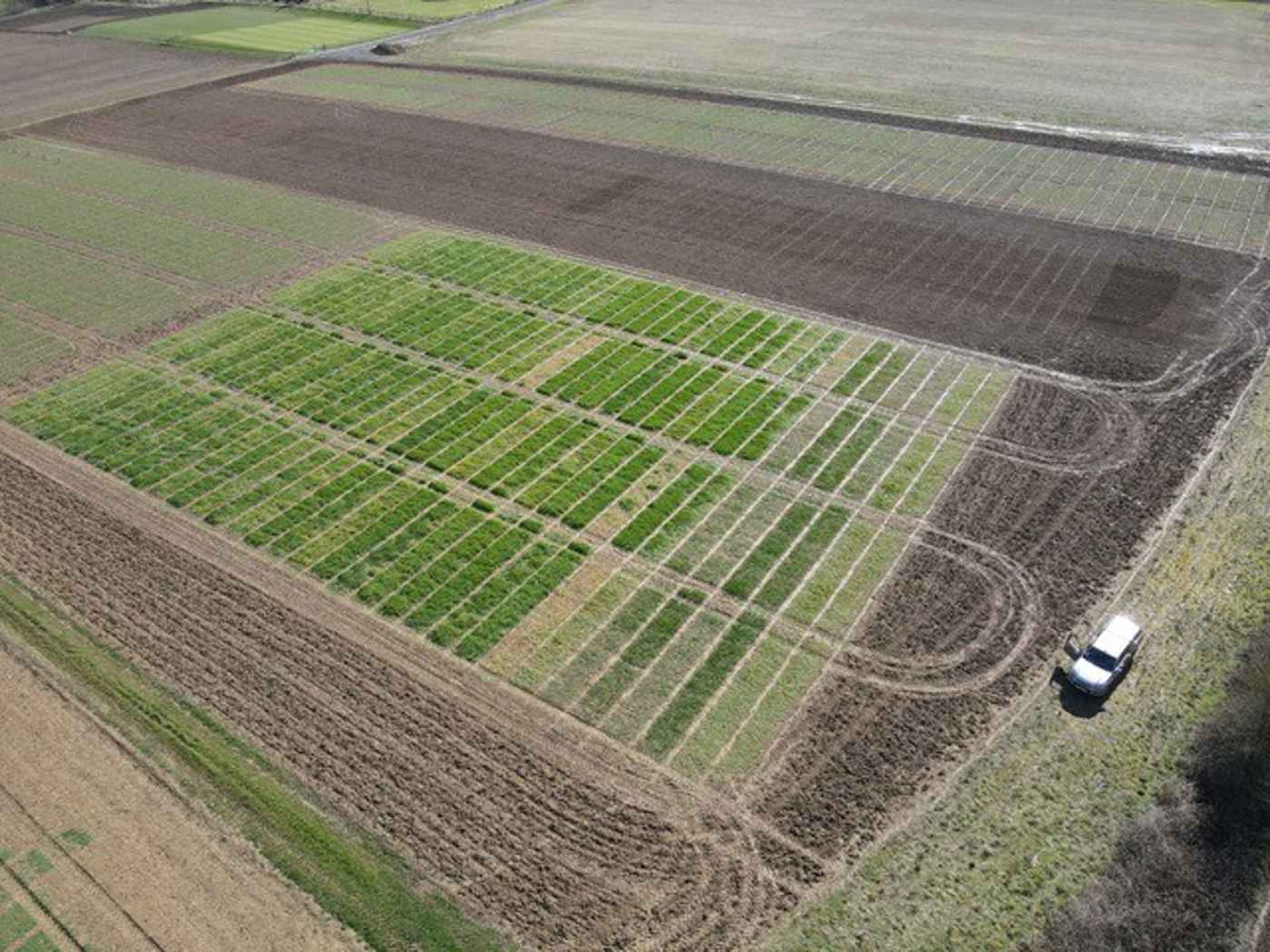
BYDV Trials at Agrii's Throws FARM
BYDV symptoms
So, given BYDV is the most economically damaging crop disease in the UK, how do you recognise it?
Unsurprisingly, given its name, the two main symptoms of the disease are a yellowing of the leaves and stunted growth. However, these vary between crops.
For example, early symptoms in barley include a golden-yellow discolouring of the young leaves, whereas in wheat, this is paler yellow or even a reddish colour.
In oats, discolouration tends to be a reddish purple.
Once infected, plants grow slowly and discolouration deepens, and as plants mature stunted growth become apparent. However, this might not be present in plants that were infected later in the growing cycle.
Infected plants can often show extensive tillering and delays in heading and ripening. The grain that is eventually produced by these plants tends to be shrivelled and low in quality.
The earlier the plants are infected, the more damage is likely to result, and peak infection time tends to be in October and November when newly sown crops have started to emerge, but the weather is not so bad as to inhibit aphid movement. Unsurprisingly, therefore, crops are at far greater risk of disease when the autumn and winter months are mild.
One thing to bear in mind, however, is not to confuse BYDV in barley with nitrogen deficiency. Whereas both conditions produced yellowing of the leaves, nitrogen deficiency affects the lower leaves which turn completely yellow.
With BYDV, it is often just the leaf tips that are affected with the lower part of the leaf remaining green.
BYDV control
Although BYDV cannot be cured, there are many control strategies that can be implemented to manage the disease.
The main factors to consider when formulating a control plan are:
• Select lower risk fields
Fields that are surrounded by minimal grassland are best for reducing the chances of an aphid infestation. This is because aphids will move from the grassland to the neighbouring crop as it starts to emerge, resulting in colonisation.
• Manage green bridges
Green bridges are anything that harbours vector aphids, and this usually means volunteer crops or annual meadow grass. To lessen the aphid burden, wait a minimum of five weeks before cultivating and sowing the field, and in the meantime destroy any weeds. This should help significantly reduce the number or aphids that infest the crop.
• Drill later
Although the lethal temperature that kills 50% of an aphid population is -6o to -7o, colder temperatures, even if they don’t fall to these levels, will impact on aphid numbers. In fact, temperature fluctuations with multiple frosts can be more effective at managing numbers than a single cold snap. So, leaving it as late as possible to drill can help to reduce the risk of infestation.
• Consider minimum tillage
Studies show that aphid colonisation tends to be lower on fields with minimum tillage, so it is worth considering a change to this approach. Retaining straw may also provide a benefit as it houses natural predators.
• Encourage natural enemies
Predator beetles and web-spinning spiders eat aphids and as such, are effective at keeping numbers down. So, encouraging them onto your crop will reduce the spread of the virus.
• Chemical control
Foliar applications of pyrethroid insecticides can be an effective way to kill the vector aphids and therefore reduce in the incidence of disease. Autumn applications, when aphid levels are highest and when leaves are starting to appear, are the most effective.
However, there is a level of pyrethroid resistance among grain aphids in the UK, so careful use is important.
• Use monitoring tools to assess levels of colonisation
A number of monitoring tools exist to assess and forecast aphid populations including yellow sticky tape, suction traps, and digital tools.
Yellow water traps are the most effective way to monitor bird cherry aphids, whereas plant inspections are the only effective way to identify grain aphids.
Some organisations, such as AHDB, run forecasting services which involve taking geography, temperature, weather forecasts, and other metrics into consideration to predict aphid numbers in specific areas.
• Minimise general stress to plants
Plants that are less stressed are much more effective at fighting off disease and infection. Therefore, minimising sources of stress will help reduce the impact of BYDV.
BYDV resistant plant varieties
As well as the various monitoring and control measures outlined above, BYDV resistance strains of wheat and barley do exist, which can significantly reduce incidents of the disease.
Resistant strains can reduce the number of sprays required, especially in low pressure years. But it is still important to be vigilant and combine these varieties with effective monitoring to be sure crops are covered.
A number of plant breeding companies such as KWS, DSV, and Syngenta produce resistant strains of barley, however RAGT is the only seed company to have a BYDV-resistant wheat strain licensed for use in the UK.

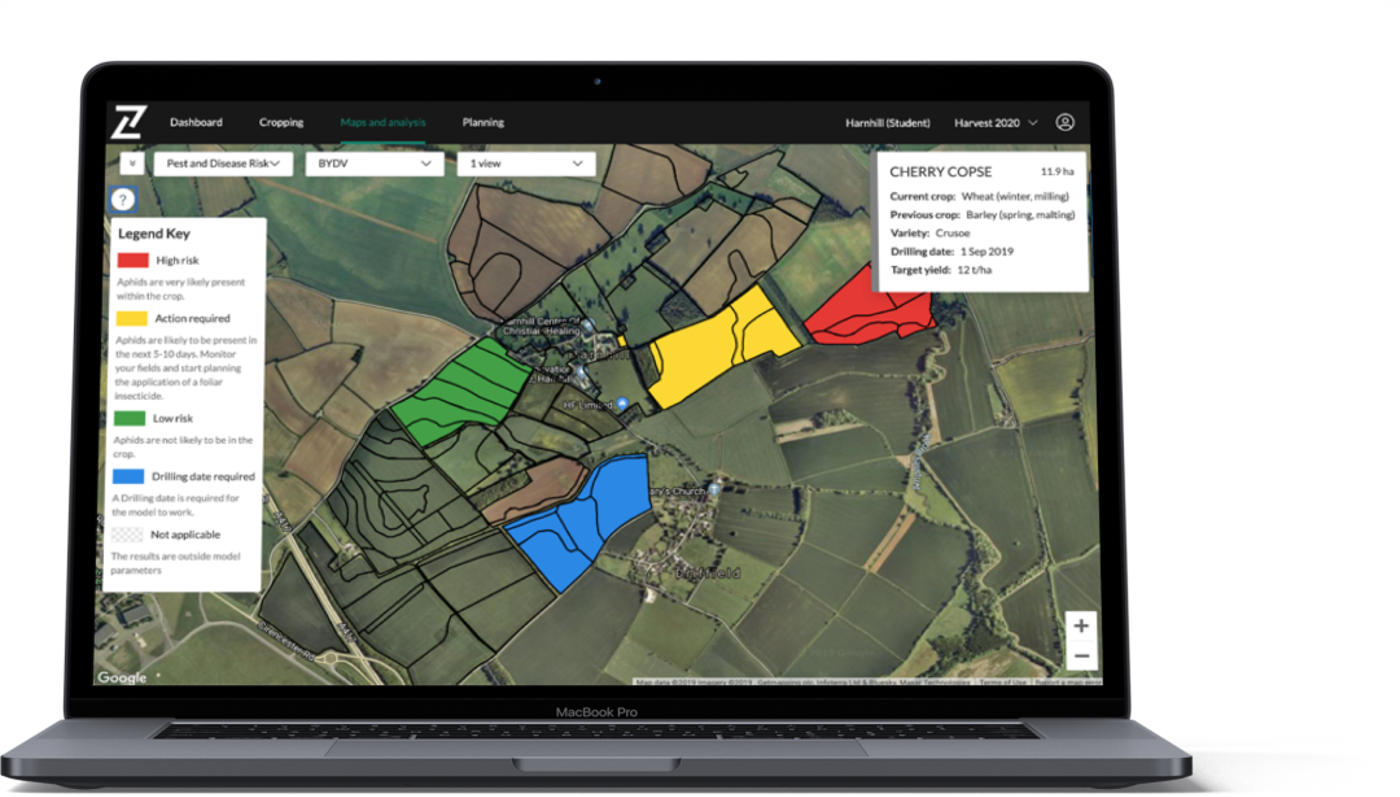
BYDV Risk Analysis in Contour
BYDV risk calculator
Because the aphids that carry BYDV are temperature sensitive, both in their general behaviour and breeding success, temperature can be a useful indicator of the risk of a BYDV infection on your farm.
As a result, T-sum calculations can provide a useful indication of aphid activity and when to take action.
T-sum refers to the cumulative sum of average daily air temperatures above 0°C from the date of drilling or crop emergency, to assess the accumulation of heat over time.
As such, and because aphids only breed at certain temperatures, increasing T-sum values enable farmers to predict when aphids are active and when they are likely to breed, enabling them to implement management strategies at the most effective times.
The T-sum is calculated by adding up the average air temperature each day and adding the result to the running total.
For example, if the average daily temperatures in oC over a five-day period were 6, 0, 3, 1 and -4, then T-sum would be (6 + 3 + 1) 10.
If, over the following five days, the average daily temperatures were 2, 3, 5, 1, and 0, T-sum would increase to 21 (10 plus 2 + 3 + 5 + 1).
A T-sum value of 170 is an indicator that the second wingless aphid generation could be starting to emerge, meaning growers should walk their crops on a daily basis and consider spraying if aphids are present.
Once sprayed, the T-sum is reset. However, if the T-sum reaches 340 before spraying, this would indicate significant aphid activity is likely and BYDV spread will accelerate, so a pyrethroid treatment should be applied as soon as possible.
Severe BYDV infestations can result in a 60% loss of yield in wheat and a 50% loss of yield in barley, so ensuring you are as protected as possible is essential.
Thankfully, however, such infestations are rare, but that doesn’t mean there is any room for complacency. BYDV is one of the most devastating diseases that can impact cereal growers, so ensure nothing can be left to chance.
RHIZA Digital Farming Knowledge Hub - Practical Guides and Insights
For those looking to explore the detail, we’ve created a growing library of technical guides covering soil performance, crop monitoring, compliance and precision decision support.
Digital Farming Knowledge Hub - Crop Monitoring and Risk Forecasting

Crop Disease Prediction – Forecasting for Common Plant Risks

BYDV Risk

Integrated Pest Management Plan
