


Benefits of Using a Crop Scouting App for Monitoring the Health of Crops
The production of healthy, high-yielding crops is integral to the success of a profitable farm business.
As digital technology advances, many farmers are turning to sophisticated methods of crop health monitoring to help them achieve this vital goal.
As a result, the number of crop monitoring tools now available to farmers is increasing at rapid rate, helping them to monitor crop health more effectively and efficiently, as well as carry out crop inspections and record accurate keeping.
In this article, we take a look at the benefits these digital platforms create for growers.
The Importance of Crop Health Monitoring in Agriculture
However, before we do that, it is important to understand the importance of crop health monitoring and what it is.
Essentially, it is the process of collecting data about crops, using software to analyse the data, and providing the results of that analysis to the farmer or agronomist in an easy-to-understand way.
This then helps in making important crop management decisions around issues such as disease and pest control, nutrient application, crop rotation, water requirements or other management issues.
By using the data, healthier, higher-yielding crops can be produced using less inputs, helping to drive profit margins.
With the advances in digital technology over recent years, farmers now have the ability to do this in real time, ensuring they can react quickly and make interventions as and when they are needed.
Performing Crop Inspections
The use of technology has revolutionised the way crop inspections are carried out, both in terms of efficiency and the amount of data that can be collected.
For example, the use of drones, satellite and aerial images to gather information means huge areas of land can be easily assessed and monitored compared what has been previously achievable.
Field sensors also provide efficient and effective ways to gather continual information on pests, disease, soil moisture levels, nutrient availability, temperature, etc, providing real time updates for farmers and agronomists that were completely unavailable before the technology existed.
Weather specific sensors, which provide more in-depth data on rainfall, windspeed and direction, and sunlight and solar radiation, complete the picture, enabling a full profile of the crop, soil, and environmental conditions to be produced.
Digital apps can collect all of this data, combine it and analyse it in context to make crop management suggestions aimed at achieving the outcome the farmer is looking for, whether that is to maximise crop yield, quality, or health.
Never before has this level of insight been available at the farmer’s fingertips, giving those who embrace digital technology a huge competitive advantage in the marketplace.
Robust crop record keeping
As well as optimising data collection and analysis, digital apps also enhance accurate record keeping, something that is often a legal obligation for farming businesses.
Typically, the can be used to store data such as:
Basic crop information
This should include crop type, sowing dates, seed variety, and planting density.
Fertiliser and crop protection applications
Dates, amount and type of product and how it was applied and under what conditions.
Irrigation
Dates, method, and the volume of water applied.
Weather
Notes on the weather should be routinely kept to produce a record of how various crops perform in different conditions.
Harvest
Dates, yield, and any observations about the crop.
Other points of interest
This encompasses anything that doesn’t fit into the previous categories and may include things such as the results of soil testing, incidents of disease, impacts of different tillage methods, etc.
As apps become commonplace on farm over time, they can also be used to keep historical records of previous crop performance as over time, producing insights such as:
- Highest and lowest yielding fields
- Weed pressure
- Soil health and quality and its impact on crop outcomes
- The impact of weather and climate conditions
- Areas more prone to pests or diseases
Collecting this data will show how the farm changes over time and any emerging trends and ongoing patterns, helping farmers and agronomists make more informed decisions about cropping as conditions change from one growing season to the next.
How to choose the right app for you
There is a variety of crop monitoring apps to choose from, all with slightly different functionality, look, and feel.
However, when it comes to picking the one that is right for you, a great place to start is to ensure they have all the standard features to help in decision making, including:
- Remote sensor monitoring for early detection of crop issues including pests and crop disease
- Date on soil health and nutrient levels
- Real-time weather forecasts and accurate data on temperature, rainfall, wind speed and direction
- Timely notifications which enable interventions to be carried out as soon as they’re needed.
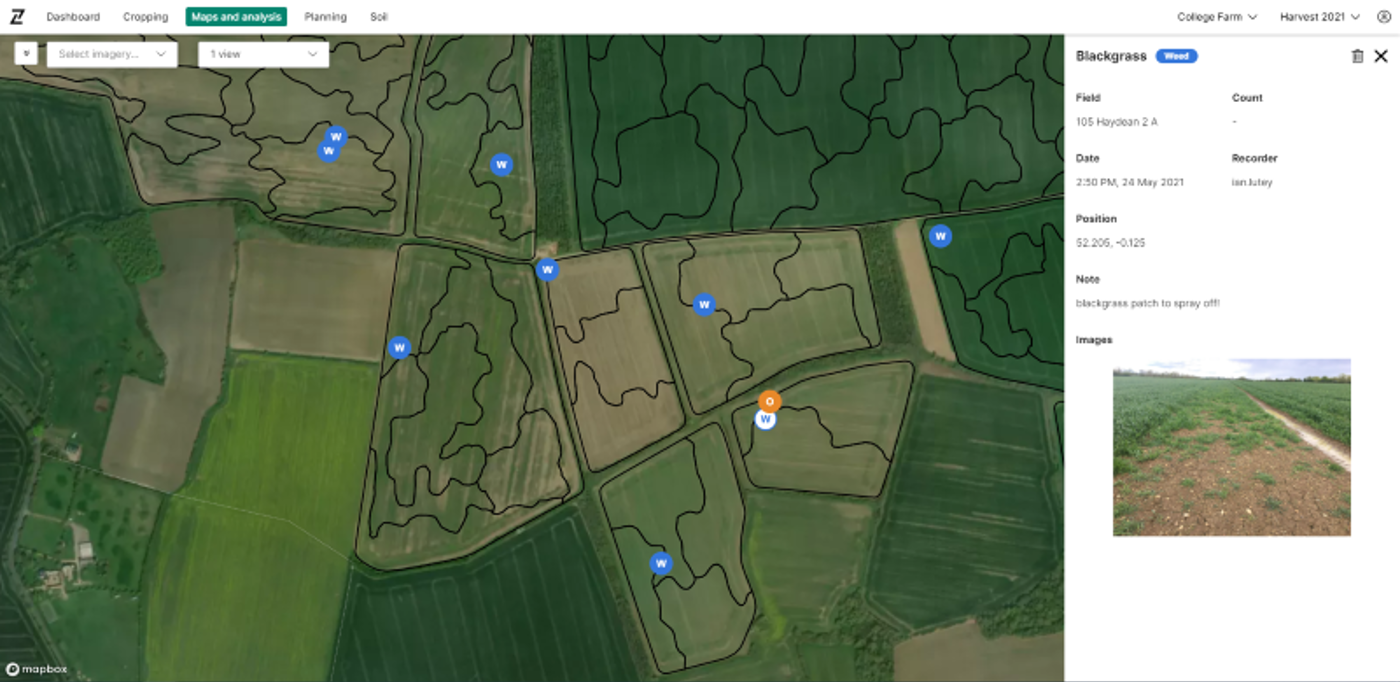
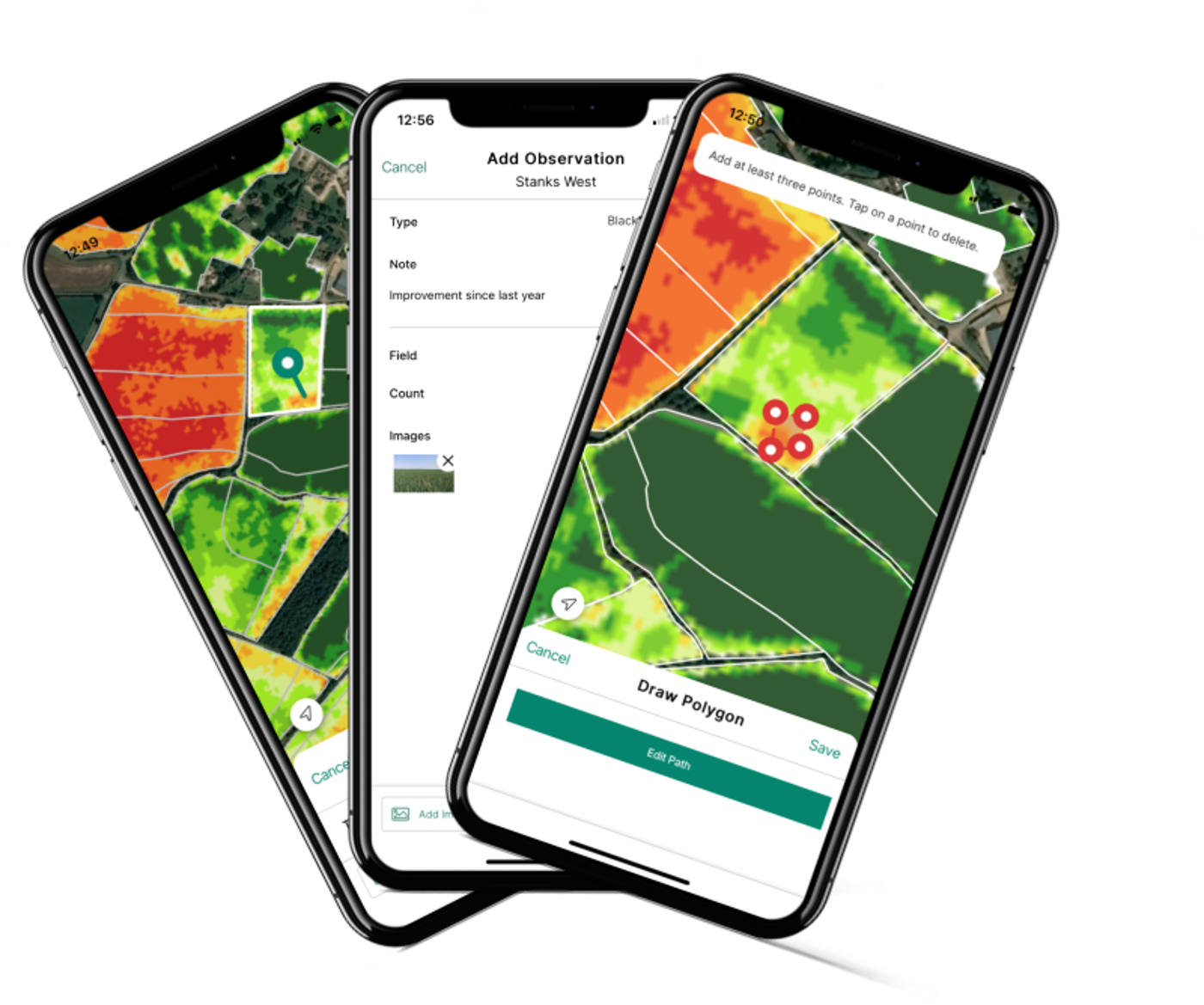
At RHIZA, our Contour platform and app allows the user to monitor crop health at a basic level, but also to drill down into much more detail.
The mobile phone app is used to record what is going on in the field and conveys this information to the Contour desktop platform, which enables the user to analyse year on year changes in pests and disease, weed pressure, soil conditions, and a number of other vital parameters.
These insights can then be used to make the best possible crop management decisions.
Summary
Effective crop management is an essential component of producing healthy, high-yielding, and profitable crops. As digital technology continues to advance, it is capable of collecting more crop and plant data than it has ever been possible to do up until now.
Couple this with powerful analytics programmes able to produce actionable insights from the data, even taking into consideration the historic context of the farm, and digital crop monitoring technologies have the potential to drive forward significant efficiencies and quality improvements in the production of many staple crops.
This is good not only for the environment, as input use can be streamlined, but also for the farmer who can realise cost efficiencies in their crop management practices.
With a number of apps now available, personal preference and cost are likely to dictate which platform individual growers choose.
However, our Contour platform offers a combination of deep insights into crop performance with an intuitive usability, producing actionable insights that take the guesswork out of optimising crop management and performance.
RHIZA Digital Farming Knowledge Hub - Practical Guides and Insights
For those looking to explore the detail, we’ve created a growing library of technical guides covering soil performance, crop monitoring, compliance and precision decision support.
Digital Farming Knowledge Hub - Precision Agriculture Tools

Precision Agriculture

Using Satellite Imaging

What is Yield Mapping

Using Crop Growth Models

Crop Management Systems

Benefits of Using a Scouting APP
